
How Genetics‑Informed Care Can Transform Bone Health
Mar 18, 2026
If you’ve been told you have osteopenia or osteoporosis, or you’re simply worried about your bone health, it can feel like your body is quietly betraying you. Yet in many cases, your bones are not failing you; they are expressing a deeper story encoded in your genetics and shaped by your environment, nutrition, stress, and hormones.
At Heights of Health, we see bone density challenges as an invitation to understand your body at a much more personalized level, so you can move from fear into a clear, hopeful plan for rebuilding resilience from the inside out.
Bones Are Genetic… but Not Your Destiny
Research suggests that genetics accounts for a large portion of the variation in bone mineral density and fracture risk among individuals. This helps explain why one person can eat “by the book,” exercise, and still struggle with thinning bones, while another seems to do everything “wrong” yet maintains strong bone density.
Knowing this is actually empowering. When we understand that your DNA helps shape:
- How effectively you use vitamin D and calcium
- How your bone‑building and bone‑breakdown cells communicate
- How sensitive your bones might be to hormones, inflammation, and certain medications
We can stop guessing and start targeting the root contributors that matter most for your body.
What Nutrigenomics Testing Reveals About Your Bones
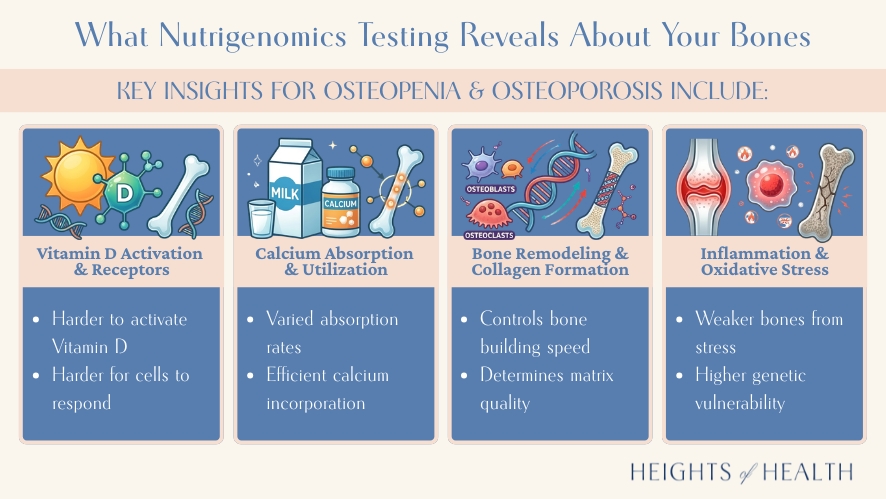
Nutrigenomics testing examines how your genes interact with nutrients and lifestyle factors to influence health outcomes such as bone density and fracture risk. In the context of osteopenia and osteoporosis, these insights often center around:
- Vitamin D activation and receptors
Certain genetic patterns can make it harder for you to convert vitamin D into its active form or for your cells to respond to it, even when your blood levels look “normal.” - Calcium absorption and utilization
Variants can impact how well you absorb calcium from food, how it’s transported, and how efficiently it gets incorporated into bone. - Bone remodeling and collagen formation
Some genes shape how actively you build new bone, how quickly you break down old bone, and the quality of the collagen matrix that gives bones their internal structure and flexibility. - Inflammation and oxidative stress
Chronic, low‑grade inflammation and oxidative stress can quietly weaken bones over time; certain genetic tendencies make you more vulnerable to these hidden drains.
Instead of treating you like an “average” patient, we can use this information to understand how your body prefers to be supported.
Moving From Generic Advice to Personalized Bone Support
Most people with osteopenia or osteoporosis are handed a familiar list: take calcium and vitamin D, do more weight‑bearing exercise, and maybe start a medication. While these can be helpful, they are not the whole story—and they are certainly not individualized.
Genetics‑informed care allows us to refine that plan:
- Targeted nutrition rather than trial‑and‑error supplements
If testing shows you need more support activating vitamin D, we may prioritize specific forms, dosing strategies, and cofactors (like magnesium and vitamin K2) rather than simply “taking more.” - Matching calcium strategies to your biology
When your genes suggest lower absorption from food alone, we can choose the most appropriate types of calcium, pair them with supporting nutrients, and ensure they’re used by bone rather than depositing where they don’t belong. - Designing an anti‑inflammatory, bone‑protective lifestyle
If your genetic profile leans toward higher inflammation or oxidative stress, we can build a plan that emphasizes specific foods, detoxification support, sleep strategies, and stress‑relief practices to protect bone over time.
This is where Heights of Health’s holistic services shine—your bone protocol doesn’t sit in a silo; it integrates with your gut, hormones, detox pathways, nervous system, and emotional health.
Exercise, Stress, and the Mind‑Body‑Spirit Connection
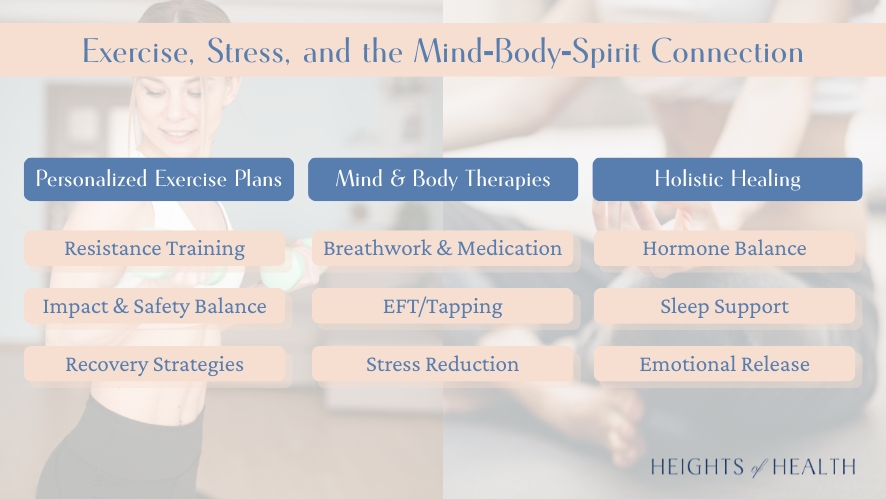
We know weight‑bearing movement is good for bones, but we also know that not everyone’s body responds the same way. Some people are more prone to tendon or joint strain, while others tolerate higher‑impact training well. Genetics‑informed insights, paired with careful assessment, help us tailor:
- The type and intensity of resistance training
- The right balance between impact and safety
- Recovery practices that support bone formation rather than chronic stress
And because your bones are influenced by hormones, cortisol, sleep, and emotional stress, we also weave in our Holistic Therapy and Mind Body Spirit Release® tools where appropriate. Techniques like breathwork, EFT/Tapping, meditation, and releasing stored emotional patterns can reduce the stress burden that silently undermines bone health.
You’re not just a skeleton on a scan; you’re a whole person. When your nervous system feels safer, your body is better able to restore, repair, and build.
Why Consider Genetics‑Informed Support If You’re “Just Concerned” About Bone Health
You don’t have to wait for a DEXA scan to flag a problem before taking action. If you:
- Have a family history of fractures, osteopenia, or osteoporosis
- Have experienced early or sudden drops in bone density
- Use medications known to affect bone
- Struggle with absorption, gut health, or long‑term inflammation
Then, genetics‑informed, holistic support can give you a head start on protecting your future self.
At Heights of Health, we combine nutrigenomics insights, functional medicine testing, and our Body‑Mind‑Spirit approach to create a truly individualized roadmap for stronger bones and a more vibrant life. Instead of guessing which diet, supplement, or protocol might work, you’ll understand why your bones need what they need—and how to support them in a way that honors your unique blueprint.
