
What You're Really Putting on Your Skin
Oct 06, 2026
By Tracy Southwick
Owner & Founder of Heights of Health
Master MBSR-P, ND, HHP, CNHP, CNA, AMP
Before you have even finished getting ready in the morning, you have probably already used a dozen different products on your body. Cleanser, moisturizer, serum, sunscreen, makeup, deodorant, lotion, hair products, perfume. The average woman uses around twelve personal care products a day, and together they expose her to roughly 168 different chemicals before she walks out the door. More than a quarter of women use fifteen or more.
Here is what unsettles me about that. We do not fully understand what many of these individual chemicals do inside the body. And we understand even less about what happens when you combine them, day after day, year after year. Nobody is studying that cocktail. Yet your skin, your largest organ, absorbs a little of it all, leaving you exposed to toxins daily.
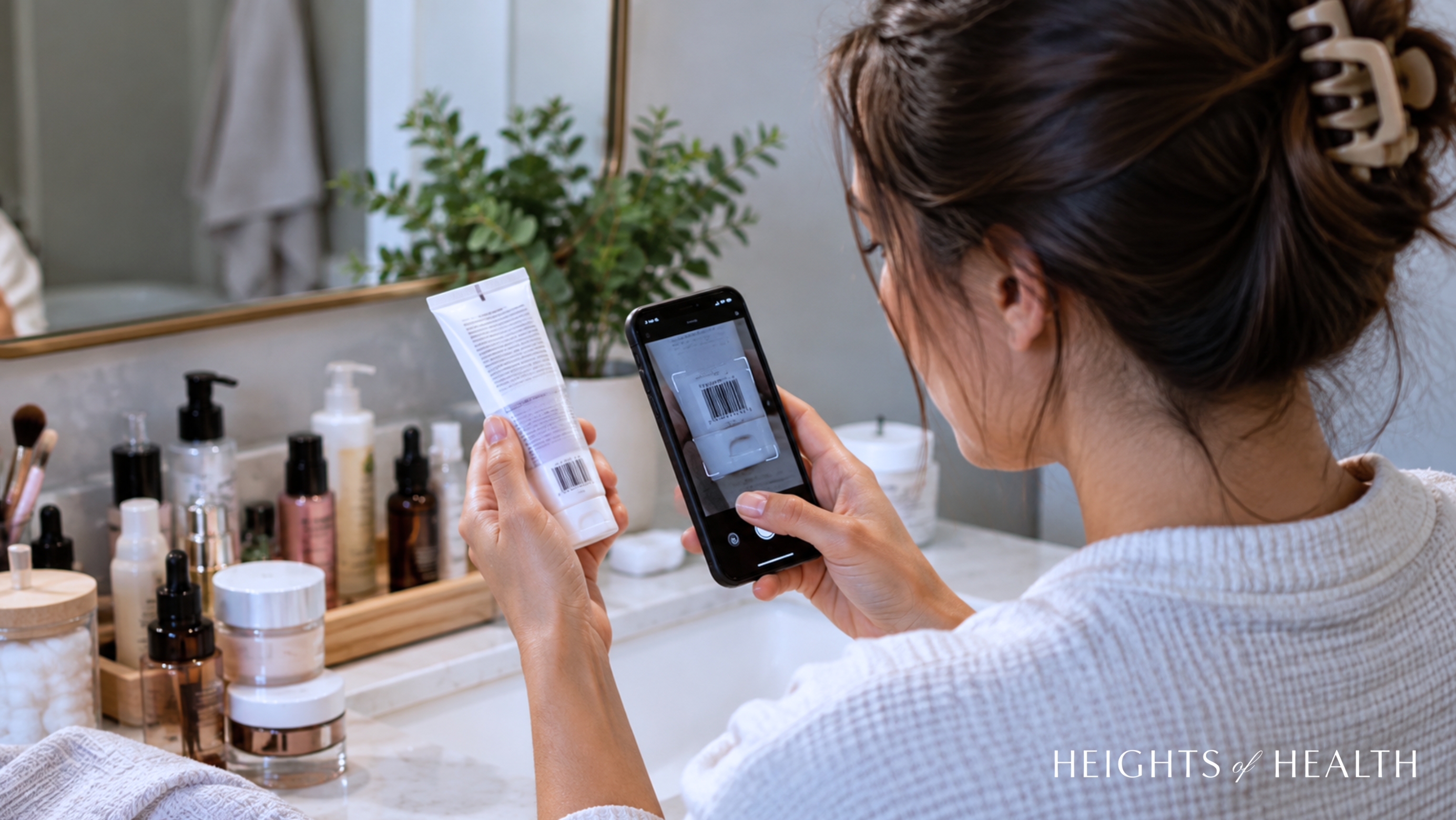
A simple place to start is to find out what you are actually using. Free apps let you scan a product barcode and see how it rates. Yuka and Think Dirty are two of my favorites. You may be surprised, and sometimes alarmed, by what is sitting in your bathroom cabinet right now.
As you look, a few ingredients are worth avoiding outright. Parabens, phthalates, and formaldehyde-releasing preservatives show up constantly and are linked to hormone disruption and worse. And then there is the sneakiest word on any label: "fragrance." That single word is a legal catch-all. A company can hide dozens of undisclosed chemicals under it and is not required to tell you a single one, because the recipe is treated as a trade secret. When you see "fragrance" or "parfum," assume you have no idea what is really in there. You can also learn more about the hazards of synthetic fragrances and healthier alternatives.
The reason all of this is allowed comes down to oversight, of which there is almost none. Thousands of new chemicals come onto the market every year, and cosmetic companies are not required to prove any of them are safe before selling them to you. They are simply expected to say their product is safe. There is no testing they must pass, no approval they must earn. The burden never lands on the company. It lands on your body.
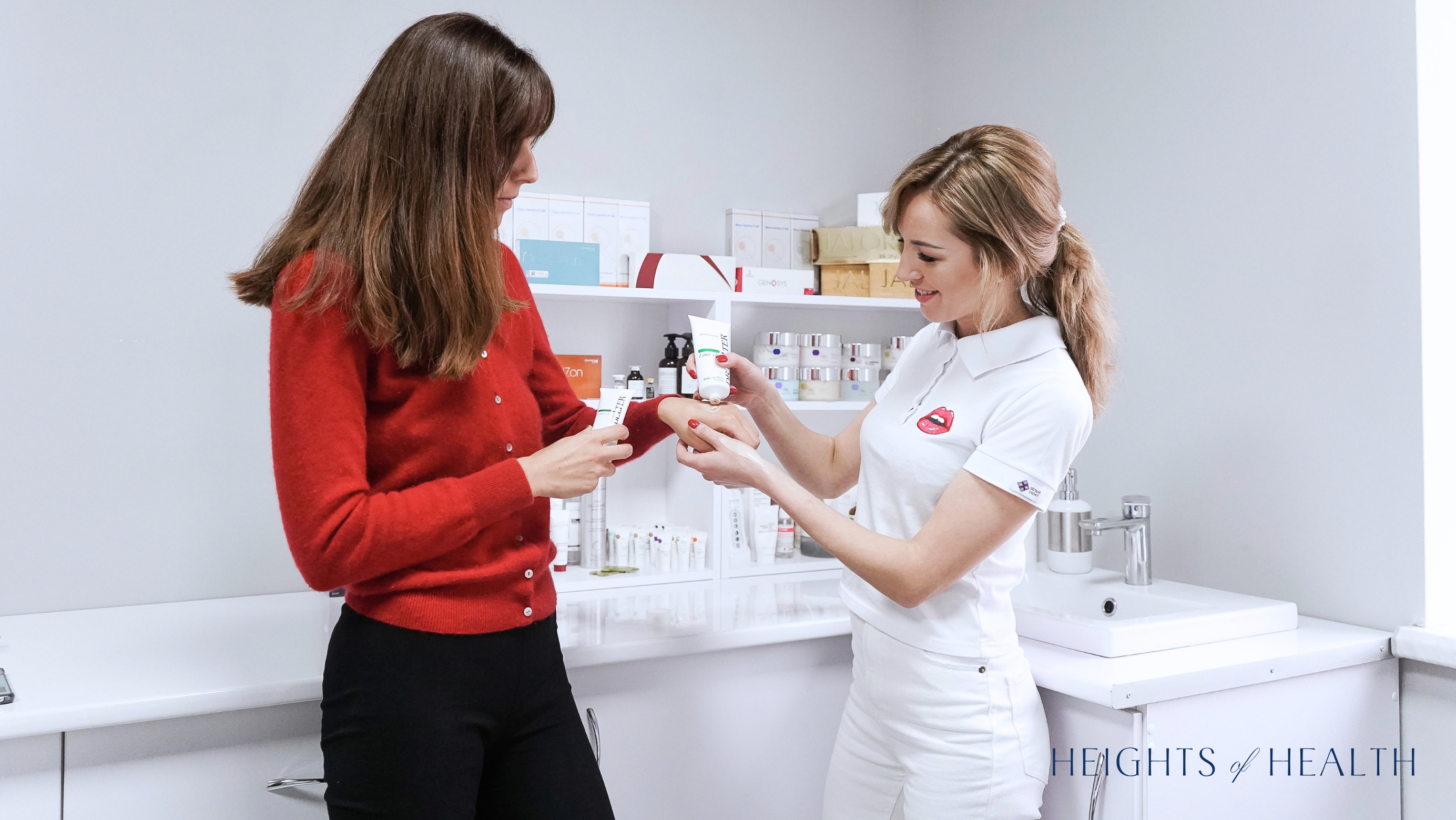
The encouraging part is that this is changing fast. More genuinely natural skin care lines come out every year, made without the junk, and honestly, many of them work better than the chemical-heavy versions. Your skin was designed to be nourished, not chemically managed, and it tends to respond beautifully when you finally take the load off.
You get to decide what goes on your skin. If you would like help sorting truly clean products from the ones that are just dressed up to look that way, that is one of our favorite things to walk through with you here at Heights of Health. Call us to set an appointment at 713-861-6777.
