
Why a High-Quality Multivitamin/Multimineral Is Essential for Everyone
May 03, 2026
By Tracy Southwick
Owner & Founder of Heights of Health
Master MBSR-P, ND, HHP, CNHP, CNA, AMP
Our food isn't what it used to be, and the evidence is hard to ignore.
Even if you eat well, you may not be getting what you think you are. Decades of modern industrial farming have quietly but substantially reduced the nutritional value of our food supply, and the research documenting this is compelling.
A landmark study published in the Journal of the American College of Nutrition found that, compared with crops grown in 1950, today's produce contains significantly less protein, calcium, phosphorus, iron, riboflavin, and vitamin C. A Kushi Institute analysis of data from 1975 to 1997 found that calcium levels in 12 common vegetables dropped an average of 27%, iron levels fell 37%, vitamin A levels declined 21%, and vitamin C dropped 30%. Popular fruits and vegetables including apples, oranges, tomatoes, and bananas, have seen a 25–50% decline in nutrient density over the past 50–70 years. Spinach iron content, for example, can vary by over 1,500% depending on where and how it was grown.
The cause is soil depletion. Modern intensive farming prioritizes yield over soil health, using chemical fertilizers that feed the crop short-term but deplete the natural mineral ecosystem of the soil over time. As one researcher noted, to match the vitamin and mineral intake of previous generations, today's consumers would need to eat two to three times the amount of food.
A Harvard-based randomized clinical trial (the COSMOS study) found that daily multivitamin supplementation in adults over 60 measurably slowed biological aging as measured by five epigenetic clocks, with statistically significant slowing in the two clocks most predictive of mortality. The effect equated to roughly four months less biological aging over two years.
This is why we consider a high-quality multivitamin/multimineral a non-negotiable foundation for nearly everyone — not as a replacement for good food, but as insurance against a food system that no longer reliably delivers what it once did.
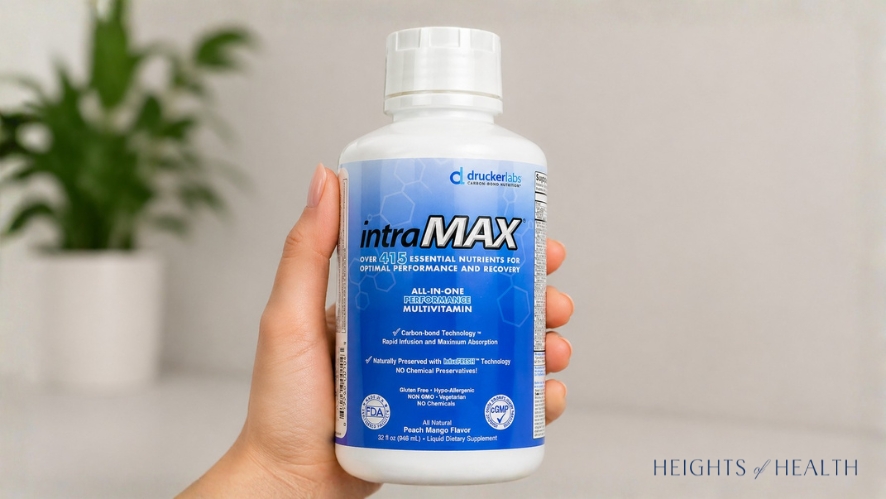
Our favorite is Intramax. It is a fulvic acid-based, carbon-bond organic liquid multivitamin that delivers over 415 nutrients in a form the body recognizes and absorbs efficiently. Because it is food-based rather than synthetically isolated, the nutrients work together the way nature intended.
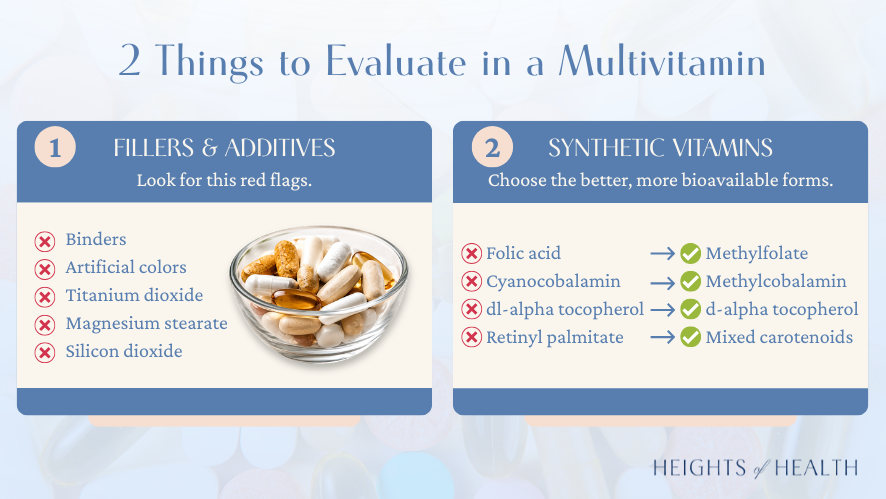
When evaluating any multivitamin, look carefully at two things. First, fillers: binders, artificial colors, titanium dioxide, magnesium stearate, and silicon dioxide are red flags — they serve manufacturing convenience, not your health. Second, synthetic vitamins: avoid products using folic acid (use methylfolate instead), cyanocobalamin (use methylcobalamin), dl-alpha tocopherol, or retinyl palmitate in place of mixed carotenoids. These synthetic forms are less bioavailable and, particularly for those with methylation variants, can create more problems than they solve. Read more about supplement quality.
The right multivitamin won't fix a poor diet, but it can meaningfully bridge the gap between what your body needs and what even a healthy modern diet consistently delivers. At Heights of Health, we help clients choose supplements that support their health goals while avoiding low-quality ingredients and unnecessary fillers.
 See our special on Intramax this month: 20% off if you purchase 2 or more bottles.
Testimonial for Heights of Health:
“You can tell they care and (I) love the approach …” L (an RN)
