
Is It Really a Behavior Problem, or Is Your Child’s Nervous System Crying for Help?
May 25, 2026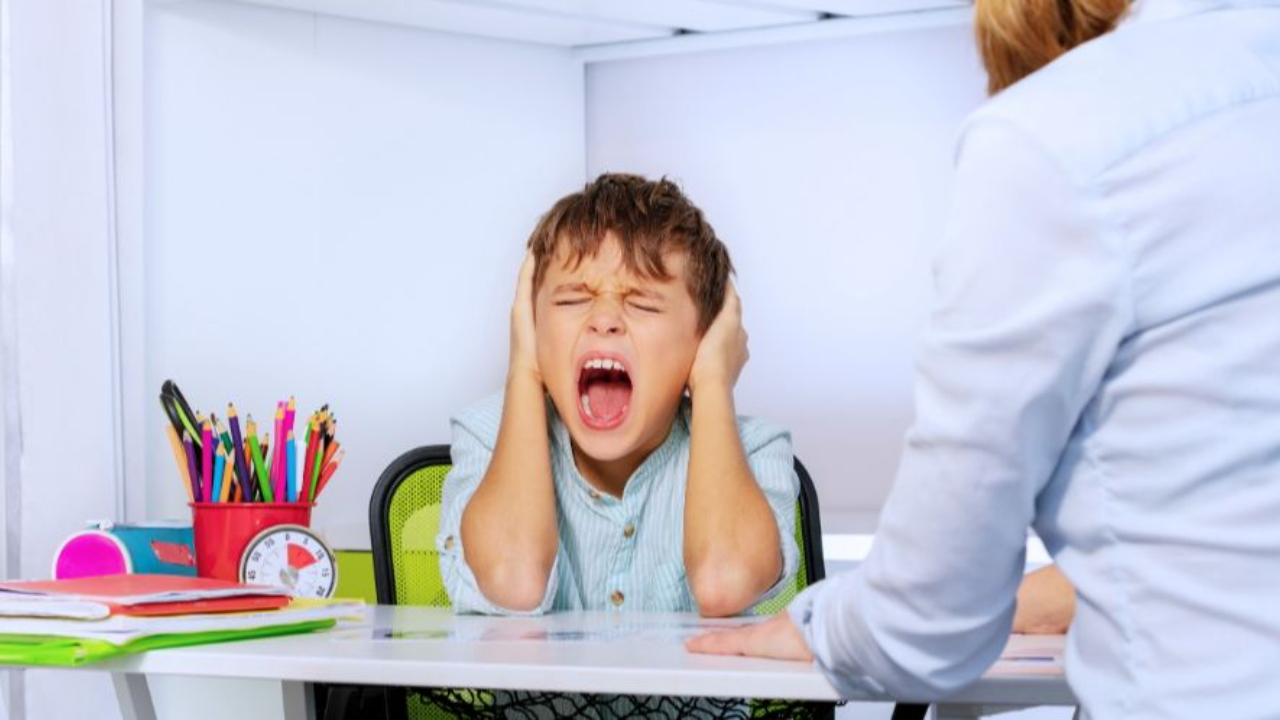
By Heather Goodwin, MA, HHP, MBSR-P
Heights of Health
Raise your parent hand if, come the end of a long summer, you wish you were a gerbil. (They often eat their offspring!) Yuck, I know. But we have all been there! What if there was a better way besides having our little honey for dinner?
Here is the good news: There IS a better way! In fact, maybe they aren’t driving us crazy on purpose, and instead, they are showing symptoms of a dysregulated nervous system.
Want some more good news? The research shows it does not take forever or heroic effort to turn things around. A randomized clinical trial found that children who received a focused intervention in emotional and nervous system regulation showed meaningful improvements in classroom behavior, focus, peer social skills, and overall emotional control in as little as four months. Four months. That is just about one summer.
The back-to-school prep list is long. Supplies, haircuts and new shoes. But the most important thing your child needs before that first bell rings may have nothing to do with any of that. A child whose nervous system is stuck in survival mode cannot learn, focus, or thrive the way they are capable of - no matter how bright or motivated they are. At Heights of Health, we want to change that this summer.
What Is Nervous System Dysregulation, and Why Are So Many Kids Affected?
The autonomic nervous system is basically the body’s command center. It has two primary modes: fight-or-flight, which kicks in when there is stress or danger, and rest-and-digest, which is when learning, healing, and connection happen.
When a child experiences ongoing stress, the stress response can get stuck. Instead of moving fluidly between activated and calm, it stays locked in high alert or shuts down altogether. Researchers have a name for this now: nervous system dysregulation. And it is far more common than most people realize. Studies suggest up to 1 in 6 children are affected; yet, because it often looks like a behavior problem, a mood disorder, or an attention issue, the nervous system piece almost never gets addressed.
It Does Not Just Show Up as Meltdowns
This is one of the most important things to understand. Nervous system dysregulation in children does not always look like big, dramatic behavior. It is often quiet, subtle, and easy to miss or misattribute to personality, laziness, or defiance.
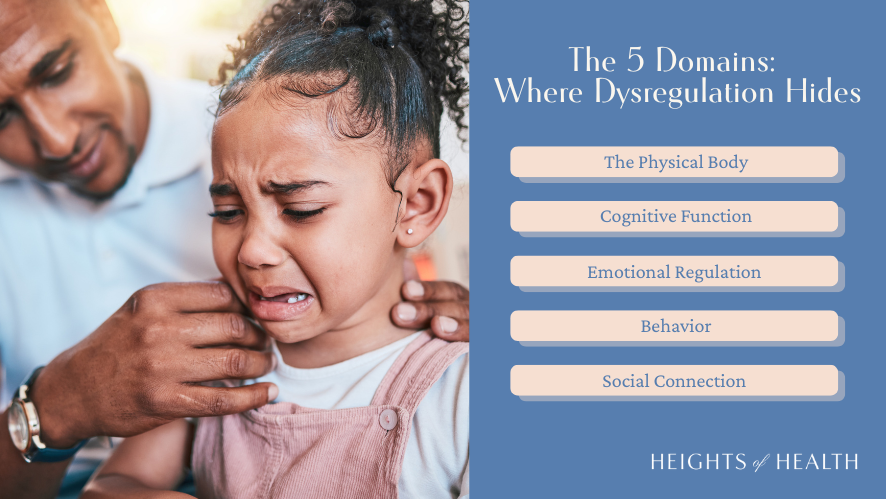
The 5 Domains: Where Dysregulation Hides
1. The Physical Body
Dysregulated children may experience frequent stomachaches or headaches with no medical explanation, disrupted sleep, sensory sensitivity to light, noise, or textures, sudden crashes from hyperactivity to exhaustion, and a system that gets sick more than it should. These are not hypochondria or attention-seeking. They are the body communicating that the nervous system is not in balance.
2. Cognitive Function
Dysregulation can affect a child’s ability to focus, transition between tasks, follow multi-step directions, organize their thoughts, and access memory under pressure. When a child is anxious, overwhelmed, or shut down, the brain's thinking center loses access to clear reasoning. The result can look like attention problems, poor academic performance, or emotional volatility. A growing body of evidence documents that a child who cannot regulate their nervous system is going to struggle academically - not because they lack intelligence, but because their brain is too busy managing threat signals to focus on learning.
3. Emotional Regulation
Dysregulation can look like mood swings that seem to come out of nowhere, meltdowns wildly out of proportion to the situation, or a child who just cannot calm down once they are upset. It can also go the other direction: a child who seems flat, checked out, spacey, or emotionally numb. Many dysregulated kids also have a hard time identifying what they are feeling, which makes it nearly impossible for them to ask for help.
4. Behavior
Dysregulation shows up in what a child does when their system is overwhelmed. They may startle easily, shut down and go silent, or constantly scan their environment for the next problem. They may avoid anything that feels like too much, IE, busy places, new situations, unexpected changes, or challenges. Many kids also develop soothing habits like nail biting, picking, or hair twirling, and struggle to follow through on basic tasks even when they genuinely want to.
5. Social Connection
Dysregulation affects how safe kids feel around their peers, how well they read social cues, and how easily they trust adults. A child who frequently misreads neutral behavior as threatening, clings to rigid routines, needs constant reassurance, or withdraws during conflict is often showing nervous system patterns that have very little to do with social skills, and everything to do with a system that has learned the world is not safe enough to relax in.
A Note on Teens
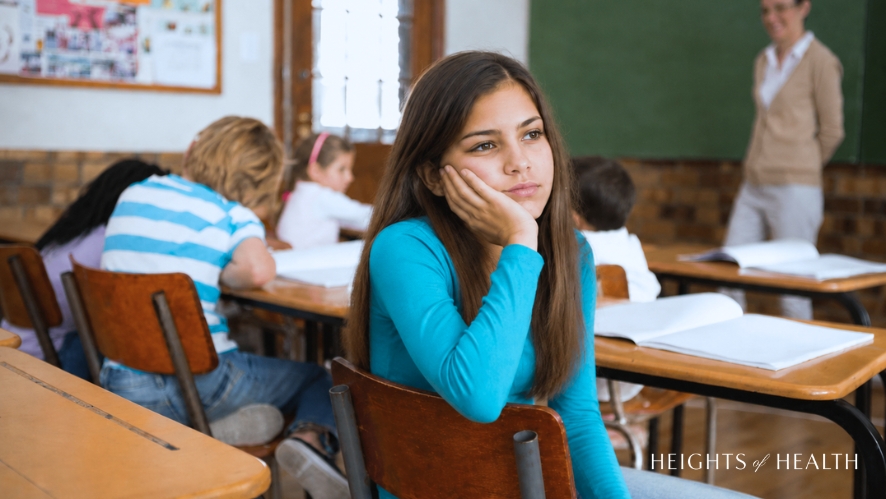
For teens, the picture shifts somewhat. Social dynamics take on greater weight. The body becomes more visible as a source of anxiety. Academic stakes increase. And crucially, teens are far less likely to name their feelings or ask for help. A teen who seems irritable, withdrawn, unmotivated, or checked out may actually be a teenager whose nervous system has been running on fumes for a long time.
In our next post, we’ll walk you through what the research says actually helps, and the evidence-based tools we use at Heights of Health to help kids and teens build genuine, lasting nervous system regulation.
With care,
Heather Goodwin, MA, HHP, MBSR-P
Heights of Health
713-861-6777 | [email protected] | heightsofhealth.com
